Digital Forensics Course: Skills, Career Path, Salary & Certification Guide
Sep 15, 2026
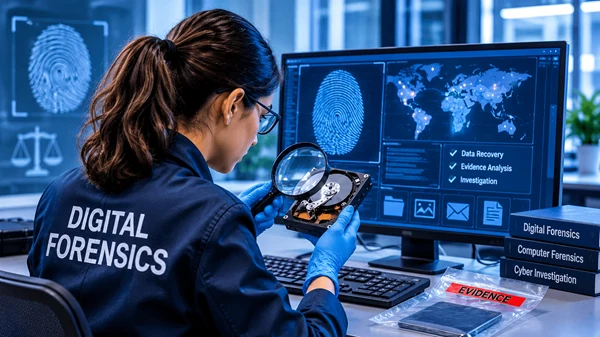
From Classroom to Career: Digital Forensics Explained
Every click, login and deleted file leaves a trace, and someone needs to read those traces in a way that stands up in court. That work is called digital forensics. Hacker School trains learners for it through a practical, job-focused digital forensics course designed for people who already know the basics of ethical hacking.
Why Pursue a Digital Forensics Course?
Cybercrime cases are rising every year, and companies cannot manage them without trained investigators. Here is why this path makes sense for you:
- High demand across sectors: banks, telecom companies, IT firms, consulting houses and law enforcement agencies all need people who can investigate incidents.
- Clear career growth: you can start as a junior analyst and move up to team lead, consultant or head of a forensic lab.
- Meaningful work: your findings can help catch fraudsters, protect victims and support court cases.
- Hands-on skills: you learn to image disks, recover deleted data and trace attackers using real tools.
- Many role options: incident response, malware analysis, mobile forensics, audits and e-discovery are all open to you.
- Good earning potential: certified investigators with solid experience are paid well, and their value keeps rising.
- Never a boring day: every case brings new devices, new apps and new attack methods to figure out.
Cyber forensic science is the discipline of collecting, preserving, examining and presenting digital evidence so that it remains reliable in court and in internal investigations. It covers laptops, servers, phones, cloud accounts, emails and networks. A good investigator needs technical depth and also a strict habit of handling evidence the right way.
A well-planned computer forensics course gives you both. At Hacker School, the training includes 50+ hours of instructor-led live sessions, and about 70 percent of it is practical work. That balance matters because investigators learn by handling evidence, not by reading slides.
Four Steps to Becoming a Digital Forensics Expert
1. Education
Most employers like to see a bachelor's degree in computer science, IT, electronics or cybersecurity, such as B.Tech, BCA or B.Sc. Without a degree, strong skills and certifications can still get you interviews, though the path may take a little longer.
Since ethical hacking knowledge is the starting point, learners should first be comfortable with networks, operating systems and common attack methods. After that, a focused computer forensics course builds the investigation side. The syllabus at Hacker School covers:
- Computer forensics investigation process
- Hard disks and file systems
- Operating system forensics
- Anti-forensics techniques
- Data acquisition and duplication
- Network, web, database and cloud forensics
- Malware, email and mobile forensics
- Investigative reports
Weekend batches run from 10:00 AM to 2:00 PM IST, live online or offline in Bangalore. The fee is ₹15,000 plus GST, payable in two instalments.
2. Career Path
Very few people begin as a full forensic investigator. Many start as a SOC analyst, system administrator, network engineer or junior security analyst. This gives you a feel for logs, alerts and real incidents.
From there, you can move into roles such as forensic analyst, incident responder, malware analyst or eDiscovery specialist. With three to five years of experience, senior investigator and team lead roles open up. Career-oriented training helps you prepare for this journey with practical casework, report writing and interview preparation.
3. Professional Certifications
Certificates prove your skills to employers and clients, especially when you are early in your career. Some widely respected options are:
- CHFI (Computer Hacking Forensic Investigator) from EC-Council. It is a popular first certificate and matches closely with the topics taught in training.
- GCFE and GCFA from GIAC. They focus on Windows forensics and advanced incident investigation.
- EnCE (EnCase Certified Examiner). It proves your skill with the EnCase tool.
- ACE (AccessData Certified Examiner). It focuses on the FTK toolset.
- CFCE (Certified Forensic Computer Examiner) from IACIS. It is known for its tough, practical assessment.
- CCE (Certified Computer Examiner) from ISFCE. It checks both knowledge and practical ability.
- CEH (Certified Ethical Hacker). It is a useful base for anyone starting out.
Choose based on your goal. If you want a broad entry-level credential, CHFI is a sensible pick. If you plan to work in corporate incident response, GIAC certificates carry strong weight. If you want to work with law enforcement agencies or court-facing cases, IACIS and ISFCE are worth considering. Tool-based certificates like EnCE and ACE are best taken when you already use those tools at work. Whatever you pick, practise on real images and sample cases before the exam, because most of these tests reward hands-on ability.
Remember that cyber forensic science changes as devices and software change, so a certificate is a starting point and not a finishing line.
4. Keep Current
New phone models, cloud services and attack tricks appear every few months, and your skills must keep pace. Follow DFIR blogs, join forensic communities, and practise on public evidence images and capture-the-flag challenges.
Revisit your recorded sessions whenever you need a refresher. They are especially useful before a certification exam. If you get stuck on a lab or tool, technical support is there to help you. Learners who finish a computer forensics course and then keep practising every week usually grow much faster than those who stop after the final class.
What Is a Digital Forensics Expert?
A digital forensics expert is a trained professional who finds, protects, studies and presents digital evidence. When a company faces a data breach, an employee misuses data, or a fraud case reaches court, this is the person who works out what happened, when it happened and who was behind it.
They rely on the methods of
cyber forensic science, where every step must be documented and repeatable. A small mistake, like touching original evidence or skipping a hash check, can make the whole case weak. That is why careful habits matter as much as technical knowledge.
Digital Forensics Course, Skills, and Experience
A good training programme should leave you with strong technical ability, clear thinking and the confidence to explain findings to non-technical people. Employers usually look for a mix of both skill sets, along with some hands-on experience from labs or internships.
Technical Skills
- Disk and file system analysis: understanding NTFS, FAT, ext4 and APFS, and how data is stored, deleted and recovered.
- Data acquisition and imaging: making exact, bit-by-bit copies of drives with write blockers while keeping hash values intact.
- Operating system forensics: reading Windows registry entries, event logs, Linux logs and macOS artefacts.
- Network forensics: studying packet captures and traffic logs, often with tools like Wireshark.
- Malware analysis: running basic static and dynamic checks to understand what a suspicious file does.
- Mobile forensics: extracting and reading data from Android and iOS devices.
- Email and web investigation: checking email headers, tracing phishing trails and reading web server logs.
- Database and cloud forensics: working with SQL logs, cloud audit trails and access records.
- Anti-forensics detection: spotting wiping tools, encryption, timestamp changes and hidden data.
- Tool knowledge and basic scripting: using Autopsy, FTK, EnCase and Volatility, along with simple Python or shell scripts to save time.
Soft Skills
Technical ability alone does not close cases. You need patience to go through thousands of log lines, and attention to detail so nothing is missed. Clear writing matters because your report may be read by lawyers, managers and judges. Honesty is also important, since you must report what the evidence shows, even when it is not what the client hoped for. Finally, calm communication helps during stressful incidents when everyone is waiting for answers.
What Do Digital Forensics Experts Do?
On a typical day, a forensic expert might respond to a security incident, secure a suspect laptop, create a forensic image and study it for signs of data theft. Some days are spent reading logs and building a timeline of events. Other days are spent writing reports or preparing to give evidence.
The work is not limited to hacking cases. Experts also help with employee misconduct, intellectual property theft, financial fraud, harassment cases and insider threats. In many organisations, they also help the security team understand how an attacker got in so that the same gap can be closed. They sometimes work alongside lawyers and police officers, so the ability to explain technical points in simple language is a real strength.
Digital Forensics Expert Job Description
Most job postings list tasks similar to these:
- Collect and preserve digital evidence from computers, phones, servers and cloud accounts using approved methods.
- Maintain the chain of custody so that every handover of evidence is recorded properly.
- Analyse data to recover deleted files, trace user activity and find signs of intrusion.
- Build timelines that show the order of events during an incident.
- Prepare clear reports that explain findings in plain language.
- Support legal teams and act as an expert witness when required.
- Advise on prevention by suggesting fixes and better security practices.
Outlook for Digital Forensics
The need for investigators is likely to keep rising. More businesses are going online, more people use smartphones for banking and work, and more data now sits in the cloud. Each change creates more places where something can go wrong, and more evidence to examine when it does.
Indian companies are also paying more attention to data protection rules and incident reporting, which pushes them to hire people who can investigate properly. Banks, fintech firms, IT services companies, consulting firms and government agencies are among the regular recruiters.
Areas such as cloud forensics, mobile forensics and malware investigation are growing especially fast. Professionals who learn these early often find it easier to stand out. The field rewards those who keep learning, so anyone willing to practise regularly will find good openings.
How Much Do Digital Forensics Experts Make?
Pay depends on city, employer, skills and certifications. In India, entry-level analysts often earn somewhere around ₹3 to ₹6 lakh per year. With three to six years of experience, many professionals move into the ₹8 to ₹15 lakh range. Senior investigators, consultants and team leads at large firms can earn well above that. Certifications, strong report writing and experience with live incidents usually help you negotiate better pay.
Frequently Asked Questions
1. Who can join this course?
Anyone with working knowledge of ethical hacking can join. Graduates in IT, computer science or cyber security find it easiest, though working professionals from other technical backgrounds also manage well with some prior preparation and regular practice.
2. How long does the training take?
The training includes 50+ hours of instructor-led live sessions, delivered in weekend batches from 10:00 AM to 2:00 PM IST. Recorded sessions stay available, so you can revise missed topics or repeat difficult labs whenever you wish.
3. Do I need to know coding?
Deep programming is not required to get started. Basic scripting in Python or shell helps you automate small tasks, but most of the training focuses on tools, evidence handling and investigation methods that you can learn step by step.
4. Can I attend online, or only in a classroom?
You can choose either. Batches run live online, and offline sessions are held in Bangalore. Both formats include practical labs and technical support, so you get the same learning experience whichever option suits your schedule.
5. What are the fees, and can I pay in parts?
The fee is ₹15,000 plus GST, and you can pay in two instalments.
Hacker School also offers a free demo, so you can see the teaching style and lab work before you decide to enrol.